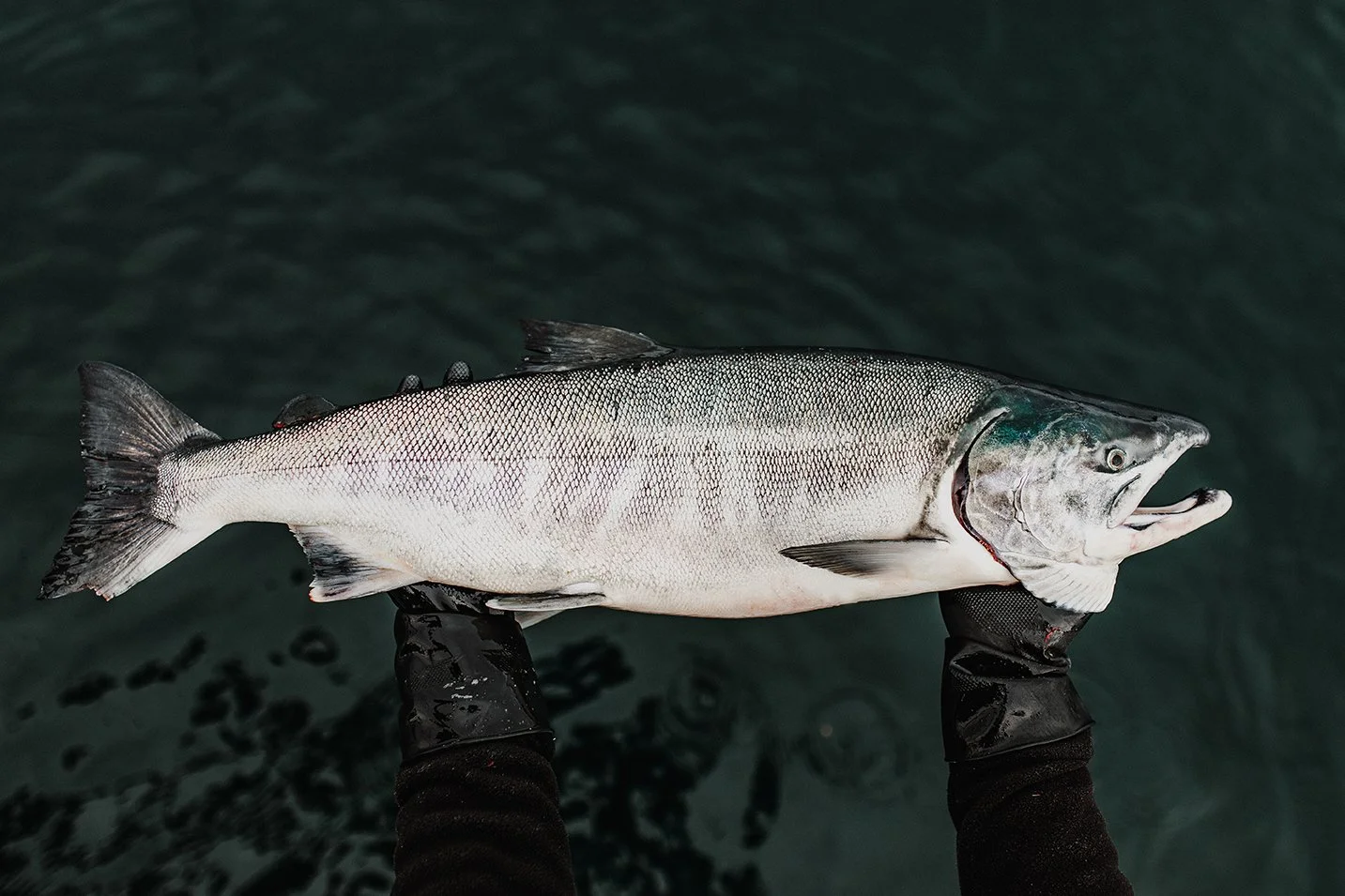
2025: A Challenging Year for Wild BC Salmon
For many on the water, 2025 was a year that highlighted both the resilience of Wild BC Salmon and the growing disconnect between abundance and access.
This past season delivered moments of optimism, but also real frustration, as management decisions continued to limit fishing opportunities even when fish were present.
Here is a closer look at what shaped the 2025 season.
Strong Sockeye Returns Brought Hope
One of the most notable developments in 2025 was the strength of sockeye salmon returns, particularly in parts of the Fraser River system.
In several cases, returns exceeded preseason forecasts by a significant margin. For fishermen who spend their lives observing salmon behaviour, migration timing, and ocean conditions, these returns were a powerful reminder that wild salmon can and do rebound under the right conditions.
Seeing healthy numbers on the water mattered, not just biologically, but emotionally and economically.
Abundance Did Not Mean Opportunity
Despite strong returns in some areas, commercial fishing opportunities remained extremely limited throughout much of the season.
Precautionary management approaches meant that many fisheries stayed closed or opened briefly, even as fish continued to move through the system. For fishermen, this was one of the most difficult realities of 2025. Paying into the system, witnessing abundance firsthand, and yet being unable to harvest.
This growing gap between observed abundance and permitted access continues to strain fishing families and coastal communities.
A Mixed Picture Across Species and Regions
It is important to acknowledge that not all salmon species or regions experienced strong returns. While sockeye stood out, other stocks, including some Chum, Chinook, and Coho populations, remained weak or returned near forecasted levels. This reinforces what fishermen have long known. Salmon management cannot be one-size-fits-all, and each run must be understood within its own ecological and regional context.
Fishermen’s Knowledge Matters
2025 also underscored the importance of including fishermen’s on-the-water observations in decision-making.
Commercial harvesters are not only resource users. They are data collectors, observers, and long-term stewards who experience changes in real time. When their knowledge aligns with strong returns, but access remains restricted, it raises difficult questions about how information is weighed and applied.
Climate and Habitat Remain the Long-Term Drivers
Beyond fisheries management, climate change, habitat degradation, water temperature, and freshwater survival continue to play a major role in salmon abundance. These pressures affect salmon long before they are ever seen in commercial fishing areas. This reminds us that recovery and sustainability require more than in-season management decisions alone.
What 2025 Made Clear
• Wild BC Salmon are still capable of strong returns
• Recovery is uneven and stock-specific
• Fishing opportunity does not always reflect abundance
• Fishermen’s observations must remain part of the conversation
Looking Ahead
As we move into 2026, there is a shared goal across the industry. Healthy salmon populations, informed management, and fair access for the fishermen who fund and sustain the fishery.
Wild BC Salmon are not just a symbol. They are livelihoods, food systems, and a way of life worth protecting.